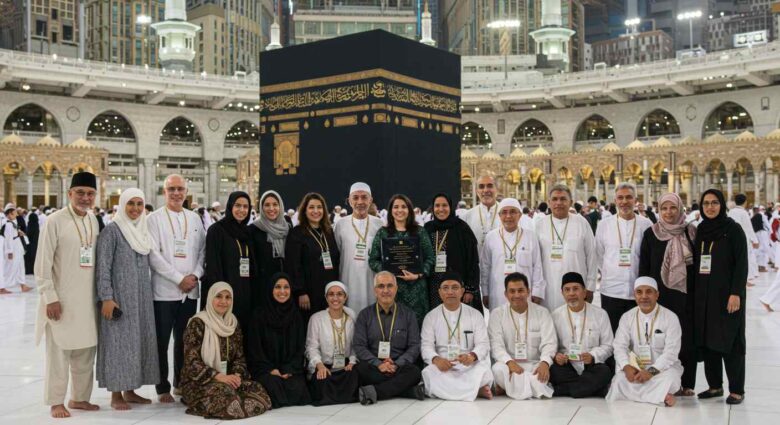




How to perform Umrah correctly is the single biggest worry for first-time pilgrims from the USA. There are so many unknown customs, Arabic words, and the risk of getting it wrong in front of the Kaaba that the intent of the journey can be forgotten.
If one step is missed, such as cutting the hair before Sa’i is performed, the entire journey will be null and void. This guide will help you break the process into five simple steps so you can concentrate on worship without worry.
What Is Umrah & Why It Matters
The shorter pilgrimage (Hajj) to Makkah, which is not obligatory, is called Umrah. It is not a fixed day like Hajj and therefore can be undertaken at any time of year except at the time of the Hajj season, making it easier to plan for pilgrims in the USA who have work, school, family, or other commitments.
Its significance comes directly from the Sunnah of the Prophet Muhammad ﷺ, who described performing Umrah during Ramadan as carrying a reward equal to Hajj. For this reason, many first-time pilgrims choose to travel alongside experienced scholars who can answer questions on the spot.
For American Muslims, this seasonal flexibility allows for planning for Umrah during the winter break, spring break, or during Ramadan, without any interference with the set Hajj schedule.
How Umrah Works: The Process Explained
There are four obligatory acts of Umrah, which are to be performed in order. The most common reason for a first-timer’s pilgrimage to be invalid is skipping the pilgrimage, not the steps. Here is an Umrah step-by-step guide for you to follow:
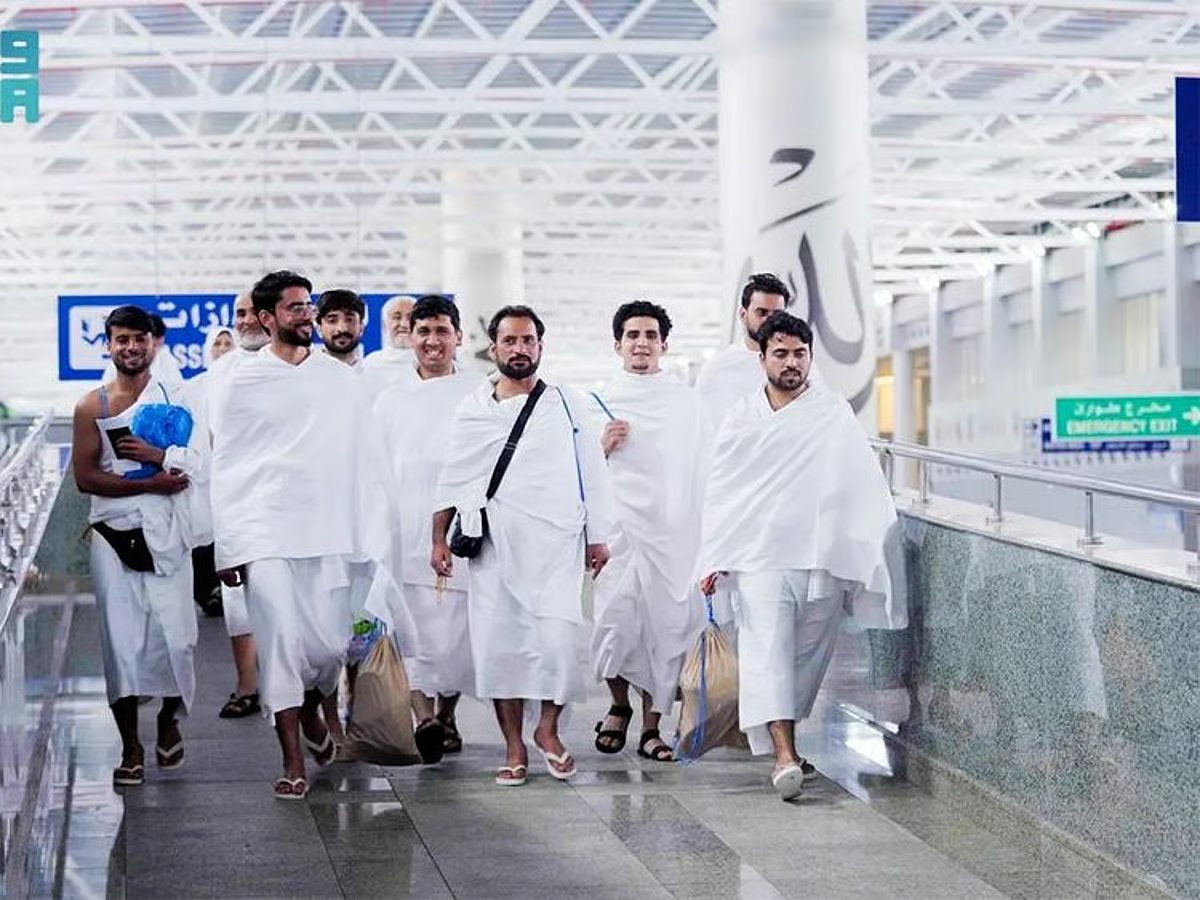
- Enter Ihram at or before the Miqat, bathe (ghusl), wear the Ihram garments, and make the niyyah (intention) for Umrah before crossing the boundary point
- Recite the Talbiyah, repeat “Labbayk Allahumma labbayk…” continuously until you begin Tawaf, confirming your intention is active
- Perform Tawaf, circle the Kaaba seven times counter-clockwise, starting and ending at the Hajar al-Aswad corner, then pray two rak’ahs near Maqam Ibrahim
- Perform Sa’i, walk seven times between the hills of Safa and Marwah, starting at Safa and finishing at Marwah
- Complete Halq or Taqsir, shave (men) or trim a fingertip’s length of hair (women) to formally exit the state of Ihram
Only after all five actions are completed in order is the Umrah considered valid. Cutting hair before finishing Sa’i, for example, does not count and requires the pilgrim to correct the sequence.
Why This Matters for First-Time Pilgrims From the USA
For American pilgrims, the stakes go beyond ritual accuracy. Getting the sequence wrong has real consequences:
- Invalid Umrah: doing steps in an incorrect sequence can result in the performance of some of the steps before leaving for the journey
- Wasted travel investment: flights from the USA to Jeddah are a high-cost investment, and limited trip days are lost at the Haram due to confusion.
- Ihram violations: If a person cuts nails or uses perfume without knowing, then Damm (expiation) will be required.
- Physical strain: Sa’i alone covers over 3 km; poor preparation leads to exhaustion mid-ritual
- Visa compliance: As of 2026, US citizens will need to have a Saudi tourist eVisa or Umrah eVisa and will also need to register on the Nusuk app before arriving in Makkah, and this process can cause confusion and delays in visa issuance.
Each step is to be taken correctly, or the whole trip will lose its spiritual and financial worth.
Best Methods to Prepare for Each Step of Umrah
- Learn the Miqat boundary for your route: For most of the flights in the USA, the Miqat is in Jeddah, and pilgrims are allowed to enter Ihram on the plane before crossing the Miqat, or at the point announced by the airline. This will prevent last-minute preparations.
- Practice the Talbiyah before departure: If you have learned the Arabic and the meaning of the Talbiyah, then you won’t be stumbling through a booklet or with a phone in a crowd of people in the Haram.
- Walk practice laps at home: Tawaf and Sa’i require about 4- 5 km of walking, so walk practice laps at home in the weeks leading up to travel to minimize any mistakes that may be made due to fatigue.
- Travel with a knowledgeable guide or group: First-time pilgrims who travel with scholars or experienced group leaders are much less likely to fall foul of the Ihram rules, particularly concerning how to navigate crowds at the corner of Hajar al-Aswad. If you’re weighing your options, checking upcoming Umrah departure dates is a good place to start.
- Confirm your Nusuk registration before arrival: Saudi authorities need Nusuk registration as well as a visa for entry to Umrah, so please be sure to confirm this early to avoid any last-minute hassles at the Haram.
Umrah Ritual Reference Table
| Item | Purpose | Why It Matters |
| Ihram | Enter the sacred state before Miqat | Crossing the Miqat without Ihram requires Damm (expiation) |
| Talbiyah | Verbal confirmation of intention | Must be recited at least once to validate the Umrah |
| Tawaf | Seven circuits around the Kaaba | The most iconic and physically demanding ritual step |
| Sa’i | Seven laps between Safa and Marwah | Commemorates Hajar’s search for water; must follow Tawaf |
| Halq / Taqsir | Shaving or trimming hair | Formally ends Ihram; doing it before Sa’i invalidates the step |
| Nusuk App Registration | Digital Umrah permit | Required alongside your visa to enter Makkah in 2026 |
Checklist: What to Look For Before You Go
✔ Valid Visa Type: US pilgrims in 2026 typically travel on a Saudi tourist eVisa or a dedicated Umrah eVisa; confirm which applies to your travel dates before booking flights.
✔ Meningitis (ACWY) Vaccination: Saudi authorities will ask for this vaccination at least 10 days before arrival; otherwise, you will be delayed at the airport.
✔ Physical Readiness: Tawaf and Sa’i together involve several kilometers of walking in crowded, warm conditions; light cardio training beforehand makes a real difference.
✔ Knowledge of Ihram Restrictions: Know what is not allowed to be done in Ihram (hunting, intimacy, perfume for men, cutting nails) because violating the restrictions will result in expiation.
✔ A Reliable Group or Guide: If you’re a first-time visitor, traveling with an experienced Umrah group means that you’re less likely to miss any steps or rituals on the crowded streets.
Expert Tip
To legally enter Makkah for Umrah, a valid Saudi visa is required, in addition to registering on the government’s Nusuk platform, a fact many first-time pilgrims typically forget.
Umrah Cost & Value Guide (USA Pilgrims)
| Service / Option | Price Range | Notes |
| Saudi Tourist eVisa (self-applied) | ~$140- $150 | Includes mandatory health insurance |
| Umrah eVisa via licensed agency | Bundled in package cost | Typically processed in 1 3 business days |
| Budget Umrah package (7 nights) | $490- $990 | Varies by hotel distance from Haram |
| Premium Umrah package (7 10 nights) | $990-$1,590 | Includes 5-star hotels, transport, and guided support |
| Meningitis vaccination | $50- $150 | Cost varies by US clinic and insurance coverage |
Prices vary by season, provider, and hotel proximity to the Haram. No package or visa type guarantees approval timelines, and costs should always be confirmed directly with your provider before booking.
Conclusion
Performing Umrah correctly comes down to following the five rites in order: Ihram, Talbiyah, Tawaf, Sa’i, and Halq or Taqsir, while staying compliant with 2026 visa and Nusuk requirements as a US-based pilgrim. Preparation, both physical and procedural, is what turns a stressful first trip into a focused, meaningful act of worship.
For those planning a first Umrah trip from the USA, it helps to have that guidance built into the journey from the start. None of this has to be figured out alone. Majmua Travels has helped pilgrims from across the USA prepare for their first Umrah with the same structure outlined in this guide, from visa and Nusuk compliance to on-the-ground guidance at each ritual step.
Whether this is your first pilgrimage or your fifth, having a clear plan is what allows the focus to stay where it belongs: on the worship itself.
FAQs
- What happens if I make a mistake during Umrah?
If someone forgets a particular dua, it doesn’t invalidate the Umrah. But if someone breaks the basic rule of Ihram or does not perform the rites in the proper order (e.g., cutting the hair before Sa’i), correction or Damm (expiation) is likely required, and it is advisable to find a guide who knows the rules on site.
- Can women perform Umrah without a Mahram from the USA?
In recent years, the civil rules in Saudi Arabia have relaxed so that women are able to travel without a Mahram in some cases. Islamically, there are different views, and it is advisable to check with your own school of thought or local imam before making a decision to travel.
- How long does it take to complete Umrah?
The entire sequence of rituals is performed in three to six hours, depending on the size of the pilgrim crowds and the season.
- Do I need a separate Umrah visa as a US citizen in 2026?
Not necessarily. Many of the pilgrims from the United States are now obtaining the Saudi tourist eVisa, which allows Umrah to be undertaken outside the Hajj season, but still requires registration on the Nusuk platform in order to be able to enter Makkah.
- What should I avoid while in the state of Ihram?
Common prohibitions are: cutting hair or nails, wearing perfume (for men), hunting, arguing, and marriage. It is normally a condition of Damm or Sadaqah to break these.